Cover Letters For Jobs Writing Tips, Format And Examples
Finding the right job takes time, effort, and careful preparation. A strong resume highlights your skills, but a cover letter helps employers understand your personality, experience, and motivation. Writing cover letters for jobs can improve your application by showing employers why you deserve an interview.
A professional cover letter introduces you to a hiring manager and explains your interest in a specific position. It also connects your qualifications with the company’s requirements. Whether you are a fresh graduate or an experienced professional, understanding how to write an effective cover letter can help you stand out.
What Is a Cover Letter for a Job?
A cover letter is a professional document that accompanies your resume during a job application. It introduces your background, explains your qualifications, and describes why you want to work for a particular company.
Unlike a resume, which presents information in a structured format, a cover letter allows you to communicate directly with employers. You can explain your achievements, career goals, and relevant experiences in complete sentences.
Most professional cover letters contain three to five paragraphs and fit on one page. They usually include an introduction, supporting information, and a closing statement.
Why Are Cover Letters Important?
Employers often receive many applications for a single position. A well-written cover letter can help your application stand out by explaining the value you could bring to the organization.
Writing effective cover letters for jobs also demonstrates communication skills and professional interest. Employers may appreciate candidates who take time to understand the company and explain their suitability.
However, not every employer requires a cover letter. Some online application systems make it optional, while others request one as part of the hiring process.
Benefits of Writing a Cover Letter
A professional cover letter offers several advantages during your job search.
- Creates a positive first impression: Introduces your professional background.
- Highlights relevant skills: Connects your abilities with job requirements.
- Explains career changes: Provides context for a new career direction.
- Shows genuine interest: Demonstrates your understanding of the company.
- Supports your resume: Adds details that your resume may not explain.
A strong cover letter does more than repeat your employment history. It explains how your experience could help the employer achieve specific goals.
Essential Elements of a Professional Cover Letter
Understanding the structure of a cover letter makes the writing process easier. Every section should serve a clear purpose and provide useful information.
1. Contact Information
Begin your cover letter with your full name, phone number, and professional email address. You can also include your city and the date.
If you know the hiring manager’s name, include it with the company information. Accurate contact details help employers reach you when they want to discuss your application.
2. Professional Greeting
A professional greeting creates a respectful introduction. Whenever possible, address the hiring manager by name.
For example, you can write “Dear Ms. Johnson” or “Dear Hiring Manager.” Avoid overly casual greetings because they may appear unprofessional.
3. Strong Opening Paragraph
Your opening paragraph should identify the position you want and explain your interest. Mention your relevant experience or strongest qualification.
Avoid starting with general statements that provide little information. Instead, explain what makes you a suitable candidate for the position.
4. Relevant Skills and Experience
The middle paragraphs should describe your professional strengths and achievements. Focus on abilities that match the job description.
For example, an administrative assistant might highlight organizational skills, scheduling experience, and customer communication. A marketing professional could discuss campaign performance, content creation, or audience engagement.
5. Professional Closing
End your cover letter by expressing interest in discussing the opportunity. Thank the hiring manager for reviewing your application.
Use a professional closing such as “Sincerely” or “Best regards.” Include your full name beneath the closing statement.
How to Write Cover Letters for Jobs Step by Step
Writing a successful cover letter becomes easier when you follow a clear process. The following steps can help you create a professional application.
Research the Company
Before writing, learn about the company’s products, services, values, and work environment. Review the job description to understand the employer’s expectations.
This research helps you explain why you want the position. It also allows you to connect your qualifications with the organization’s needs.
Understand the Job Requirements
Read the job advertisement carefully and identify the most important skills. Pay attention to experience requirements, technical abilities, and responsibilities.
Select two or three qualifications that match your background. Explain how you have used those skills in previous work, education, or projects.
Write a Clear Introduction
Start with the job title and a brief explanation of your interest. Mention your strongest relevant qualification.
For example, a customer service applicant might discuss experience resolving customer concerns. A fresh graduate could highlight academic projects or internship experience.
Highlight Measurable Achievements
Employers often value specific results more than general claims. Whenever possible, describe your achievements using accurate numbers.
Instead of saying you improved sales, explain that you increased monthly sales by 15 percent. Only include figures that you can support with genuine experience.
Customize Your Application
Avoid sending exactly the same cover letter to every employer. Adjust the content according to each job description.
Personalized cover letters for jobs can demonstrate that you understand the position. They also help employers identify your most relevant qualifications.
Review and Edit
Check your cover letter for grammar, spelling, and formatting errors. Read it carefully to ensure every paragraph contributes useful information.
Remove unnecessary details and repeated statements. A clear and concise letter often communicates your qualifications more effectively than a lengthy document.
Professional Cover Letter Format
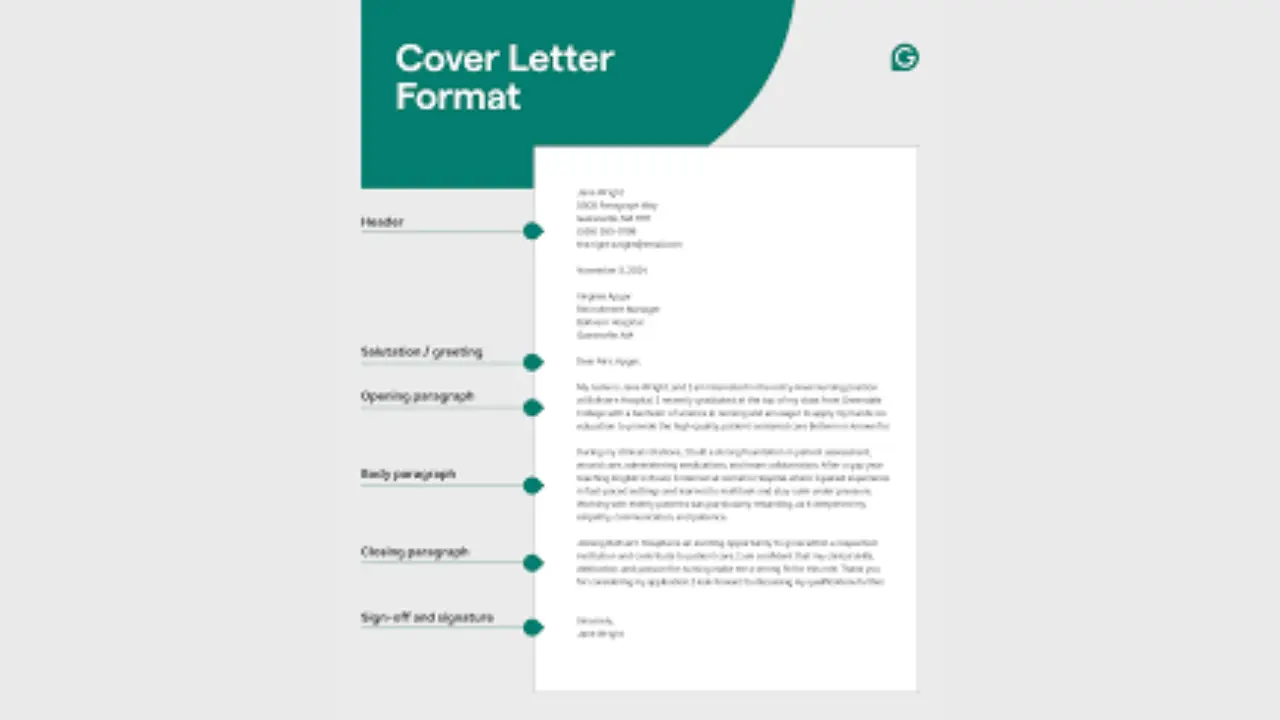
A simple format makes your application easier to read. The following table explains the main sections of a standard cover letter.
| Section | Information to Include |
|---|---|
| Header | Name, email, phone number, and date |
| Greeting | Hiring manager’s name or professional greeting |
| Introduction | Job title and reason for applying |
| Body paragraph | Relevant skills, experience, and achievements |
| Closing paragraph | Interest in an interview and appreciation |
| Signature | Professional closing and full name |
Use a readable font such as Arial, Calibri, or Times New Roman. Keep the font size around 10–12 points and maintain consistent spacing.
Professional Cover Letter Example
A practical example can help you understand how to organize your application. The following sample demonstrates a simple professional approach.
Dear Hiring Manager,
I am writing to apply for the Administrative Assistant position at your company. My organizational skills, communication abilities, and experience managing office responsibilities make me a strong candidate.
In my previous role, I coordinated schedules, maintained records, and supported daily administrative activities.
I am interested in joining your organization because I value teamwork, professionalism, and continuous improvement. I believe my attention to detail and ability to manage multiple responsibilities would support your team.
Thank you for considering my application. I would welcome the opportunity to discuss how my qualifications match your requirements.
Sincerely,
[Your Name]
This example provides a clear structure without unnecessary information. Applicants should replace general statements with their actual achievements and qualifications.
Cover Letters for Different Types of Jobs
Different industries require different skills and professional qualities. Your cover letter should reflect the responsibilities of your chosen position.
Cover Letter for Fresh Graduates
Fresh graduates may have limited professional experience. However, they can highlight academic achievements, internships, volunteer work, and relevant projects.
Employers often look for communication skills, adaptability, and willingness to learn. Explain how your educational experiences prepared you for workplace responsibilities.
Cover Letter for Experienced Professionals
Experienced candidates should focus on career achievements and industry knowledge. Explain how your previous responsibilities relate to the new position.
Mention leadership experience, technical skills, or successful projects when relevant. Avoid describing every previous job because your resume already provides that information.
Cover Letter for Career Changes
Changing careers requires a slightly different approach. Explain your motivation and identify transferable skills.
For example, a teacher entering corporate training could highlight presentation skills, lesson planning, and communication. These abilities may support training and employee development responsibilities.
Cover Letter for Remote Jobs
Remote positions often require independence, communication, and time management. Highlight your ability to work effectively without constant supervision.
Mention experience using collaboration software or managing virtual projects when applicable. Employers want candidates who can remain productive and communicate clearly across locations.
Common Mistakes to Avoid
Even qualified applicants can weaken their applications through avoidable mistakes. Understanding these problems helps you write more effective documents.
Using Generic Content
Generic letters often fail to explain why you want a specific job. Employers may find them less convincing than customized applications.
Review the job description and include relevant details. Show how your qualifications connect with the employer’s requirements.
Repeating Your Resume
Your cover letter should complement your resume rather than copy it. Focus on explaining the meaning and value of your experiences.
Use examples that demonstrate your problem-solving abilities and professional contributions. This approach provides employers with additional insight.
Writing Too Much
Long cover letters may become difficult to read. Most applications benefit from a focused document of approximately 250–400 words.
Include only information that supports your application. Remove unrelated personal details and unnecessary explanations.
Making Grammar Mistakes
Spelling errors and incorrect grammar can create an unfavorable impression. Review your writing before submitting the application.
You can also ask someone to proofread your document. A second review may identify mistakes you overlooked.
Cute Bubble Letters Easy Step-by-Step Guide for Beginners
Tips for Writing an ATS-Friendly Cover Letter
Some employers use applicant tracking systems, or ATS software, to organize applications. These systems may store, search, or analyze cover letter content.
When preparing cover letters for jobs, use straightforward formatting and relevant terminology from the job description. Avoid unnecessary graphics, complicated layouts, and unusual symbols.
Include important skills naturally without repeating keywords excessively. Clear language helps both hiring managers and automated systems understand your qualifications.
Follow the employer’s instructions about file format. Some organizations prefer PDF documents, while others request Word files or text entered directly into an application form.
How Long Should a Cover Letter Be?
A professional cover letter should generally fit on one page. Around 250–400 words is a practical target for many applications.
The ideal length depends on the position and employer instructions. Senior or specialized roles may require more detailed explanations, while entry-level applications often benefit from shorter letters.
Focus on quality rather than word count. Every sentence should explain your interest, demonstrate a qualification, or support your application.
Alphabet Bubble Letters Easy Steps, Styles & Tips for Beginners
Should You Use AI to Write a Cover Letter?
AI writing tools can help applicants brainstorm ideas, organize information, and improve grammar. They can also suggest clearer ways to describe professional achievements.
However, applicants should review and personalize any generated content. Employers need accurate information about your experience and qualifications.
Avoid including invented achievements, false job titles, or exaggerated skills. A genuine cover letter builds trust and prepares you for interview questions.
Frequently Asked Questions
1. Are Cover Letters Necessary for Every Job?
No, not every employer requires a cover letter. However, submitting one can provide additional context when the application allows it.
2. Can I Use the Same Cover Letter for Multiple Jobs?
You can reuse a basic structure, but customize the content for each position. Highlight the skills and experience most relevant to the employer.
3. What Is the Best Opening for a Cover Letter?
Start by mentioning the position and your strongest relevant qualification. A direct introduction helps employers understand your purpose immediately.
4. Should I Include Salary Expectations?
Include salary expectations only when the employer requests them. Otherwise, focus on your qualifications, achievements, and interest in the position.
5. What Makes a Cover Letter Stand Out?
A strong cover letter combines relevant experience, specific achievements, and genuine interest. Clear writing and professional formatting also improve readability.
Conclusion
Writing professional cover letters for jobs is an important skill for anyone seeking employment. A well-organized letter introduces your qualifications, explains your motivation, and supports the information in your resume.
The most effective applications focus on relevant achievements, clear communication, and accurate details. Researching the employer and customizing your message can make your application more meaningful.
Whether you are applying for your first position, changing careers, or pursuing a senior role, a thoughtful cover letter can strengthen your job application. By following a clear structure and avoiding common mistakes, you can present your professional value with greater confidence.