Popsicle Stick Catapult Easy DIY Science Activity
A popsicle stick catapult is a simple hands-on project that teaches basic science, engineering, and problem-solving skills. Children can build one with a few common craft supplies and then test how far it can launch lightweight objects.
This activity works well for classrooms, science fairs, homeschool lessons, and weekend crafts. It combines creativity with STEM learning while giving kids a fun way to understand force, motion, energy, and angles.
What Is a Popsicle Stick Catapult?
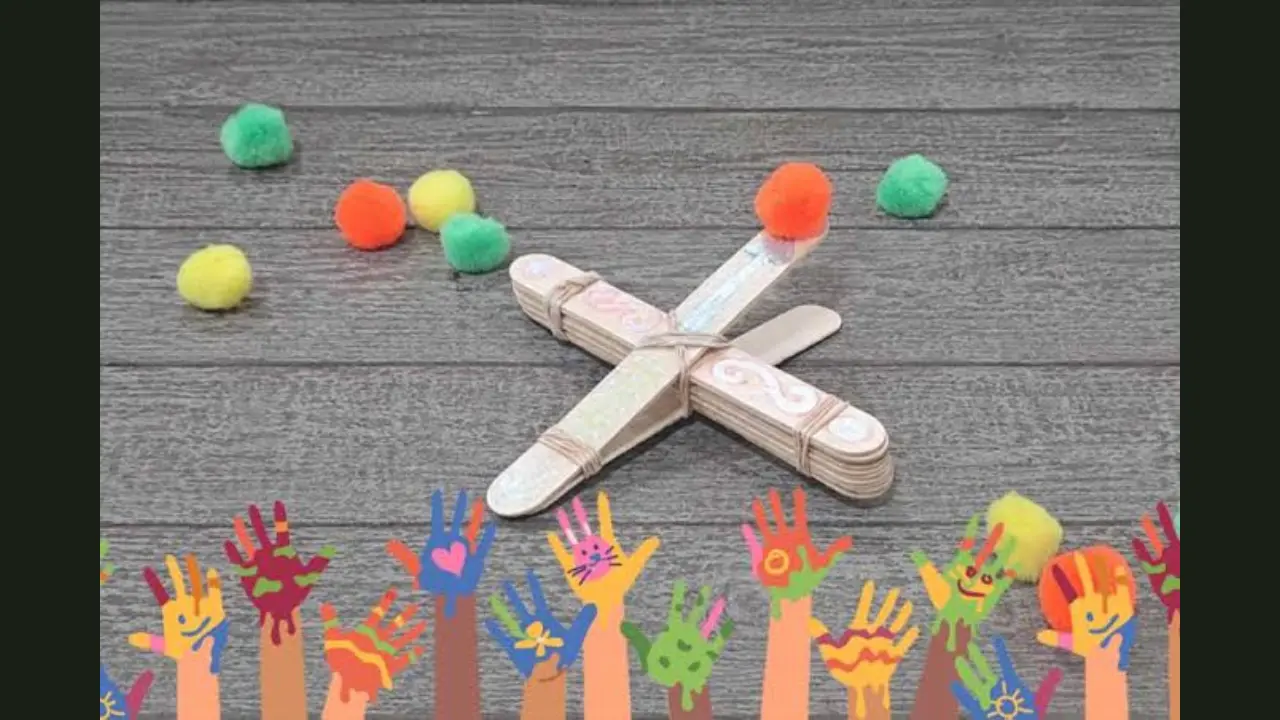
A popsicle stick catapult is a small launching device made mainly from wooden craft sticks. It usually uses rubber bands to hold the sticks together and a plastic spoon or bottle cap to hold the object being launched.
The design works like a basic lever. When you push the launching arm down, you store potential energy. When you release it, that stored energy changes into motion and sends the object forward.
Unlike large historical catapults, this small model is safe for indoor learning when children use soft objects such as pom-poms, cotton balls, or small paper balls.
Materials You Need
You do not need expensive equipment for this project. Most materials are available in craft stores, school supply shops, or even around the house.
You will usually need:
- 8 to 12 popsicle sticks
- 4 to 6 rubber bands
- One plastic spoon
- Small pom-poms or cotton balls
- A ruler or measuring tape
- Optional markers or stickers for decoration
It is better to use strong craft sticks that do not bend easily. You should also choose rubber bands that are flexible but not too loose.
Alphabet Bubble Letters Easy Steps, Styles & Tips for Beginners
How to Make a Popsicle Stick Catapult
Building a popsicle stick catapult takes only a few steps. Children should still work under adult supervision, especially if the activity involves small objects.
First, stack about six or seven popsicle sticks on top of each other. Wrap a rubber band tightly around both ends of the stack. This stack will act as the support base.
Next, take two additional popsicle sticks and place one on top of the other. Wrap a rubber band around one end of these two sticks.
Separate the open ends of the two sticks and slide the larger stack between them. Move the stack closer to the tied end until the structure feels stable.
Now attach a plastic spoon to the top stick using one or two rubber bands. The spoon will hold the item that you want to launch.
Place a soft object inside the spoon. Push the spoon down gently and release it. The object should move upward and forward.
Cute Bubble Letters Easy Step-by-Step Guide for Beginners
How the Catapult Works
A catapult works because of stored energy. When you press down on the launching arm, you create elastic potential energy in the structure.
When you release the arm, the stored energy becomes kinetic energy. Kinetic energy is the energy of motion.
The launching arm quickly moves upward. That movement transfers energy to the object inside the spoon and pushes it through the air.
This simple model also shows how levers work. The stacked sticks create a support point, while the longer stick acts as the lever arm.
What Kids Can Learn From This Project
A popsicle stick catapult is more than a fun craft. It can help children understand several important science and engineering ideas.
Kids learn that changing one part of a design can change the final result. For example, moving the support stack may increase or decrease the launch distance.
They can also learn about gravity. Even when an object flies upward, gravity eventually pulls it back toward the ground.
The project introduces children to measurement as well. They can measure the distance of each launch and compare the results.
Testing Different Launch Angles
Launch angle plays an important role in how far an object travels. Kids can experiment by changing the angle of the launching arm.
A very low angle may send the object forward but not very far. A very high angle may send it upward without covering much horizontal distance.
Children can record each result in a notebook. They can then compare the angle with the distance traveled.
This type of experiment helps children understand that science often involves testing, recording, and improving.
Experimenting With Different Objects
The type of object placed in the launcher can also affect performance. Lightweight objects usually behave differently from heavier objects.
Try launching cotton balls, paper balls, mini pom-poms, or small pieces of sponge. Avoid hard or sharp items because they may cause injury or damage.
A popsicle stick catapult gives students an easy way to compare mass and motion. They may discover that the lightest object does not always travel the farthest because air resistance can also affect movement.
Recording the results can turn a simple craft into a real science experiment.
Ways to Improve the Design
Once the basic model works, children can try improving it. They might add more sticks to the base, change the position of the support stack, or use a different spoon.
Another option is to change the number of rubber bands. Stronger tension may produce a faster launch, but too much tension can make the structure unstable.
Kids can also change the length of the launching arm. A longer arm may affect speed, distance, and launch height.
Each design change creates a new question. That makes the activity useful for teaching the engineering design process.
STEM Benefits of Catapult Activities
STEM stands for science, technology, engineering, and mathematics. A small catapult activity can include all four areas.
Science appears when students study energy, force, motion, and gravity. Engineering appears when they build and improve the structure.
Mathematics becomes part of the project when students measure distance, compare results, calculate averages, or create charts.
Technology can also play a role if students record slow-motion videos or use digital tools to study their results.
A popsicle stick catapult can therefore turn a basic craft session into a complete learning activity.
Fun Classroom Catapult Challenges
Teachers can use catapults for several classroom challenges. For example, students can compete to see which design launches a pom-pom the farthest.
Another challenge can focus on accuracy instead of distance. Place a cup, box, or paper target several feet away and ask students to land the object inside it.
You can also create different scoring zones. Give more points to smaller or more distant targets.
These activities encourage teamwork, testing, and creative thinking without requiring complicated equipment.
Safety Tips
Safety should always come first during catapult activities. Only soft and lightweight objects should be launched.
Never aim the device at another person, pet, window, computer screen, or fragile item. Children should always point the launcher toward a clear area.
Adults should supervise younger children because rubber bands and small craft materials may present choking or snapping risks.
Students should also inspect the craft sticks before use. Broken or cracked sticks can create sharp edges.
How to Turn the Activity Into a Science Experiment
A popsicle stick catapult becomes even more educational when students create a clear experiment around it.
Start with one question, such as, “Does the number of sticks in the base affect launch distance?” Change only one factor at a time.
Launch the same object several times and measure each distance. Record the numbers and calculate the average result.
Students can then make a conclusion based on the evidence they collected. This process teaches them how scientists test ideas in a controlled way.
| Test | Object Used | Launch Distance | Result |
|---|---|---|---|
| 1 | Cotton Ball | 120 cm | Short launch |
| 2 | Pom-Pom | 175 cm | Medium launch |
| 3 | Paper Ball | 210 cm | Long launch |
| 4 | Sponge Piece | 160 cm | Medium launch |
The numbers above are only examples. Actual results depend on the catapult design, rubber band tension, object weight, and launch angle.
Why Kids Enjoy This Activity
Children often enjoy projects that allow them to build something and immediately test it. Catapults provide fast results, which makes experimentation exciting.
Kids can see what happens when they change the design. They do not only read about force or motion; they observe these ideas in action.
The project also encourages creativity. Students can decorate their catapults, create targets, or build different models to compare performance.
Common Problems and Easy Fixes
Sometimes the catapult does not launch properly. A loose rubber band is one common cause. Tightening the bands can make the structure stronger.
If the launching arm moves sideways, make sure the base stack sits evenly between the two main sticks.
If objects fall out before launch, use a deeper plastic spoon or attach a small bottle cap to the launching arm.
If the catapult keeps tipping over, add more sticks to the base or hold the base gently during testing.
Conclusion
Building a popsicle stick catapult is an easy and affordable way to combine science with hands-on fun. The activity teaches children about energy, motion, gravity, levers, measurement, and engineering design.
Students can build the basic model in a short time and then spend much longer testing different ideas. By changing the launch angle, object weight, stick position, or rubber band tension, they can discover how small design changes affect performance.
This project works especially well because it encourages children to ask questions, test solutions, and learn from their results. With simple materials and proper safety rules, it can become an enjoyable STEM activity for both home and classroom learning.