Six Letters Meaning, Examples, Word Lists
Words play an important role in everyday communication. They help us share ideas, express emotions, and understand information. Learning words with different lengths can also improve reading, writing, and spelling skills.
Six letters form many useful English words that appear in conversations, books, games, and school lessons. These words offer a good balance between simple spelling and interesting meanings. They also help learners build stronger vocabulary skills.
In this article, we will explore six-letter words, their meanings, common examples, and practical learning methods. We will also explain how these words help in puzzles, education, and daily communication.
What Are Six-Letter Words?
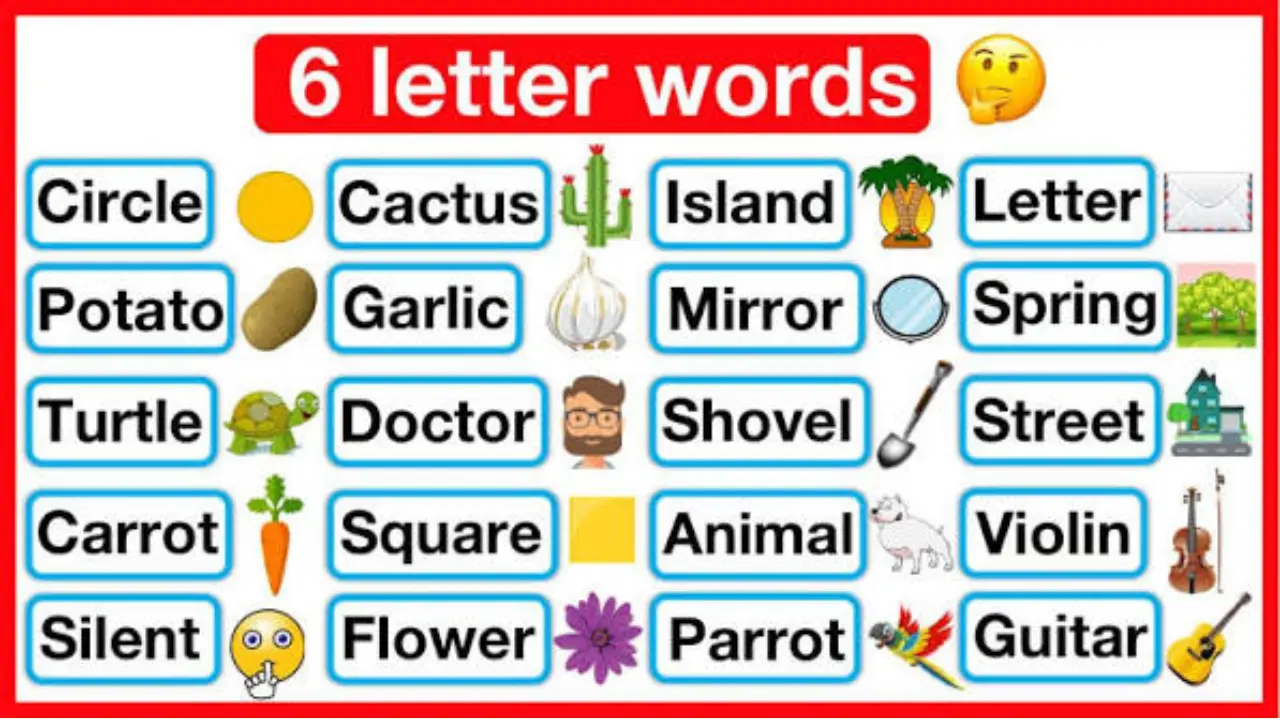
A six-letter word contains exactly six alphabetic characters. These words can describe people, places, objects, actions, feelings, or ideas.
For example, school, friend, family, nature, and planet each contain six alphabetic characters. They are common English words that students and adults use regularly.
Some words are easy to pronounce, while others have more complex spelling patterns. Learning both types can improve language confidence and communication skills.
Why Are Six Letters Important in English Vocabulary?
Words containing six letters are useful because they appear in many everyday situations. They provide enough variety to help learners explore different spelling patterns and word meanings.
Many six-letter words also introduce important grammar concepts. Students can learn about nouns, verbs, adjectives, and other word categories through familiar examples.
These words are especially helpful for children who want to move beyond basic vocabulary. They can improve spelling accuracy, reading fluency, and sentence construction.
Common Six-Letter Words in English
English contains thousands of words with six alphabetic characters. Some appear frequently in daily conversations, while others belong to specific subjects.
The following table includes common examples and their meanings.
| Word | Meaning |
|---|---|
| Friend | A person you like and trust |
| Family | A group of related people |
| School | A place where students learn |
| Planet | A large object that orbits a star |
| Nature | The physical world |
| Garden | An area where plants grow |
| Animal | A living creature |
| Winter | The coldest season |
| Summer | The warmest season |
| Bright | Giving off plenty of light |
| Simple | Easy to understand |
| Strong | Having great strength |
| Travel | To move between places |
| Create | To make something new |
| Listen | To pay attention to sounds |
These examples show how six-letter words cover many everyday topics. Learning their meanings can help students communicate more clearly.
Six-Letter Words Starting With Different Alphabets
Learning words alphabetically makes vocabulary practice more organized. It also helps students remember spelling patterns and discover new words.
Here are some examples arranged by their starting letters.
| Starting Letter | Examples |
|---|---|
| A | Animal, Artist, Always |
| B | Banana, Basket, Bottle |
| C | Camera, Castle, Circle |
| D | Doctor, Dinner, Dragon |
| E | Engine, Effect, Energy |
| F | Family, Flower, Forest |
| G | Garden, Golden, Guitar |
| H | Hammer, Honest, Hungry |
| I | Island, Insect, Impact |
| J | Jacket, Jungle, Junior |
| K | Kitten, Knight, Kernel |
| L | Laptop, Listen, Little |
| M | Market, Mother, Mirror |
| N | Nature, Number, Narrow |
| O | Orange, Office, Online |
| P | Pencil, Planet, People |
| Q | Quartz, Quoted, Quiver |
| R | Rabbit, Rocket, Random |
| S | School, Silver, Simple |
| T | Travel, Turtle, Tomato |
| U | Unique, United, Useful |
| V | Valley, Velvet, Vision |
| W | Window, Winter, Wonder |
| X | Xenial, Xylose, Xylems |
| Y | Yellow, Yogurt, Yonder |
| Z | Zodiac, Zombie, Zipper |
Some letters have fewer common examples than others. For instance, six-letter words beginning with X are less common in everyday English.
Six-Letter Words for Kids
Children often learn vocabulary through pictures, stories, songs, and classroom activities. Short and familiar words make the learning process easier.
Words such as rabbit, kitten, banana, pencil, and flower are excellent starting points. Children can connect these words with familiar objects and animals.
Parents and teachers can encourage students to pronounce each word aloud. They can also ask children to write simple sentences using the new vocabulary.
For example, a child might write, “The rabbit eats grass.” This activity strengthens spelling, grammar, and sentence-building skills.
Regular practice helps children recognize common letter combinations. It also builds confidence when they encounter unfamiliar words.
Six-Letter Words for Word Games and Puzzles
Word games make vocabulary learning entertaining and challenging. Players must recognize spelling patterns, remember meanings, and arrange letters correctly.
Words with six letters are especially useful in crossword puzzles, Scrabble, anagrams, and spelling competitions. They provide enough complexity to challenge players without becoming overwhelming.
In crossword puzzles, players often receive clues that describe a six-letter answer. Understanding synonyms and common meanings can help them solve these clues.
Anagram games require players to rearrange letters to create meaningful words. For example, the letters in “listen” can form “silent” and “enlist.”
These activities improve concentration, pattern recognition, and vocabulary recall. They also encourage players to explore words they might not normally use.
Six-Letter Nouns With Examples
Nouns identify people, places, objects, and ideas. Many common English nouns contain exactly six letters.
Examples include doctor, mother, pencil, garden, and castle. These words appear frequently in everyday speech and writing.
Consider the following sentences:
- The doctor helped the patient.
- My mother enjoys reading.
- I bought a new pencil.
- Flowers grow in the garden.
- The castle stands on a hill.
Each sentence shows how a six-letter noun can communicate a clear idea. Practicing nouns helps learners identify important parts of a sentence.
Six-Letter Verbs and Their Meanings
Verbs describe actions, events, or states. Learning common verbs helps students create meaningful and grammatically correct sentences.
Some useful six-letter verbs include listen, travel, create, accept, follow, and decide. These words describe activities and decisions that people make regularly.
| Verb | Meaning | Example Sentence |
|---|---|---|
| Listen | Pay attention to sound | Please listen carefully. |
| Travel | Go from one place to another | We travel every summer. |
| Create | Make something new | Artists create beautiful work. |
| Accept | Agree to receive something | I accept your invitation. |
| Follow | Move behind someone | Follow the marked path. |
| Decide | Make a choice | We decide together. |
Understanding these verbs improves sentence construction. It also helps learners describe actions with greater accuracy.
Six-Letter Adjectives for Better Writing
Adjectives describe the qualities of nouns. They make writing more detailed and help readers imagine people, places, and objects.
Examples include bright, clever, gentle, honest, lovely, and strong. Each word describes a different quality or characteristic.
For example, “The bright moon appeared above the trees” creates a clearer image than “The moon appeared.”
Writers can use descriptive words to make stories and essays more interesting. However, choosing accurate adjectives matters more than adding too many descriptions.
Positive Six-Letter Words
Positive vocabulary helps people express encouragement, appreciation, and kindness. These words can make conversations more supportive and meaningful.
Some positive words include caring, joyful, honest, gentle, lovely, and humble. Each word represents a quality or feeling that people often value.
For example, “caring” describes someone who shows concern for others. “Joyful” describes a person who feels or expresses happiness.
Teachers can introduce positive vocabulary during classroom discussions. Parents can also encourage children to use these words when describing helpful behavior.
Alphabet Bubble Letters Easy Steps, Styles & Tips for Beginners
How to Find Words With Six Letters Easily
Finding words with six letters becomes easier when learners use a systematic approach. Instead of guessing randomly, they can focus on spelling patterns and familiar word groups.
Start by identifying the first or last letter of the word. Then look for common combinations such as “ing,” “tion,” or “er.”
For example, words ending in “ing” include making, eating, moving, and seeing. These examples show how familiar endings can help narrow a search.
Another useful method involves grouping words by topic. Categories such as animals, food, nature, and occupations make vocabulary easier to remember.
Learners can also practice with dictionaries and word lists. Checking the spelling and meaning of unfamiliar words helps prevent mistakes.
Common Spelling Patterns in Six-Letter Words
English spelling follows several common patterns, although exceptions exist. Recognizing these patterns can help learners read and spell unfamiliar vocabulary.
Words such as “flower,” “shower,” and “yellow” contain familiar letter combinations. Other examples, including “little” and “bottle,” feature double consonants.
Some words contain silent letters that make pronunciation less predictable. For example, the letter K remains silent in “knight.”
Students should practice pronunciation alongside spelling. This approach helps them connect written words with spoken English.
Cute Bubble Letters Easy Step-by-Step Guide for Beginners
Benefits of Learning Six-Letter Words
Learning words with six letters offers several educational benefits. It supports vocabulary growth and strengthens important language skills.
One major benefit involves reading comprehension. Students who recognize more words can understand stories, instructions, and educational materials more easily.
Another benefit involves writing improvement. A broader vocabulary allows learners to express ideas without repeating the same simple words.
Vocabulary exercises can also support memory and concentration. Regular practice encourages students to recognize patterns and recall meanings more quickly.
These benefits extend beyond schoolwork. Strong language skills can improve everyday conversations and professional communication.
Easy Activities to Practice Six-Letter Words
Vocabulary learning becomes more effective when students practice regularly. Simple activities can make the process enjoyable and manageable.
One useful activity involves creating a daily word journal. Students can write five new words, record their meanings, and create example sentences.
Another activity involves matching words with definitions. Teachers can prepare cards containing vocabulary on one side and meanings on the other.
Word searches and crossword puzzles also provide engaging practice. They encourage learners to identify letter sequences while solving challenges.
Students can additionally organize words into categories. For example, they might group animal names, action words, and descriptive words separately.
Common Mistakes When Counting Letters
Counting letters seems simple, but learners sometimes make mistakes. These errors often occur when words contain repeated letters or unusual spelling patterns.
For example, “banana” contains six letters, even though some letters repeat. Every alphabetic character counts toward the total.
Another common mistake involves confusing syllables with letters. The word “family” contains six letters but usually has three syllables.
Hyphenated expressions can also create confusion. Word games may apply different rules to spaces, punctuation, and combined words.
Always check the rules of the activity before counting. This habit helps learners avoid incorrect answers.
Frequently Asked Questions
What are some easy six-letter words?
Common examples include school, friend, family, garden, animal, and planet. These words are easy to recognize and useful in everyday English.
Are six-letter words useful for students?
Yes, they help students practice spelling, pronunciation, reading, and sentence construction. They also introduce useful grammar patterns.
Which six-letter words are good for word games?
Words such as listen, silent, enlist, planet, and rocket can be useful in word games. Their usefulness depends on the game’s rules and available letters.
How can children memorize six-letter words?
Children can use flashcards, spelling games, short stories, and daily writing exercises. Regular practice helps improve long-term vocabulary recall.
Can six-letter words be nouns, verbs, and adjectives?
Yes, they can belong to many grammatical categories. For example, “garden” is a noun, “create” is a verb, and “bright” is an adjective.
Conclusion
Understanding six letters and the words they form can help learners develop stronger English language skills. These words appear in school lessons, daily conversations, books, and word games.
Learning common examples, exploring spelling patterns, and practicing sentences can make vocabulary development easier. Students should focus on understanding meanings rather than memorizing word lists alone.
With consistent practice, anyone can expand their vocabulary and become more confident in reading, writing, and communication.