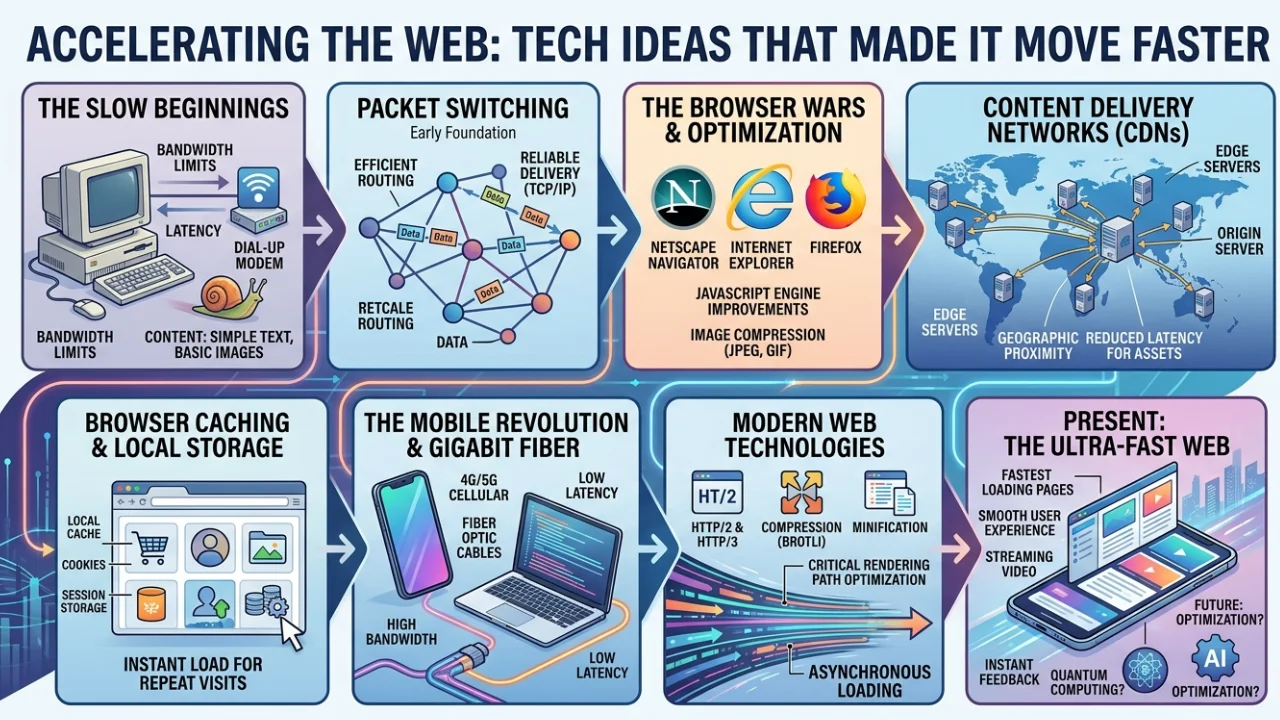
Tech Ideas That Made the Web Move Quicker Fully Explained
The internet feels fast today, but it did not always work that way. Years ago, websites loaded slowly, videos buffered often, and online games lagged badly. Over time, smart developers and engineers created better systems that improved speed across the web. These innovations changed how people browse, shop, stream, and communicate online. Tech Ideas That Made the Web Move Quicker
Must Check: Alphabet Bubble Letters Printable for Kids, Crafts, and Learning
In this article, you will learn about the most important tech ideas that made the web move quicker and why they still matter today.
Why Web Speed Matters
People expect websites to load in seconds. A slow website can frustrate users and make them leave quickly. Faster websites improve:
- User experience
- Search engine rankings
- Online shopping sales
- Video streaming quality
- Mobile browsing
- Cloud applications
Today, companies focus heavily on speed because users value smooth performance.
The Early Internet Was Very Slow
In the 1990s, many people used dial-up internet. Websites contained simple text and small images because internet speeds stayed limited. Downloading a single song could take hours.
As the web grew, developers needed better technology to handle:
| Problem | Effect on Users |
|---|---|
| Slow internet connections | Long loading times |
| Large website files | Delayed browsing |
| Weak servers | Website crashes |
| Limited bandwidth | Poor video quality |
| Too many requests | Lag and buffering |
This challenge inspired many of the tech ideas that made the web move quicker over the years.
Broadband Internet Changed Everything
Broadband replaced dial-up internet and became one of the biggest upgrades in web history. It allowed people to stay connected all the time while enjoying much faster speeds.
Broadband technologies included:
- DSL
- Cable internet
- Fiber-optic internet
Fiber internet became especially important because it transfers data using light signals. This method supports very high speeds and low latency.
Because of broadband, websites could include:
- High-quality images
- HD videos
- Interactive features
- Online gaming
- Video conferencing
Without broadband, the modern internet would not exist.
Content Delivery Networks Improved Global Speed
A Content Delivery Network, also called a CDN, stores website content on servers around the world. Instead of loading data from one distant server, users receive data from a nearby location.
This system greatly reduces loading time.
How CDNs Work
| Step | What Happens |
|---|---|
| User opens a website | Browser sends request |
| CDN finds nearest server | Local server responds |
| Content loads faster | User sees webpage quickly |
CDNs became one of the most important tech ideas that made the web move quicker because they reduced delays for global users.
Popular streaming services and large websites rely heavily on CDN technology today.
Better Web Browsers Increased Speed
Modern browsers became smarter and faster over time. Early browsers struggled with complex websites, but modern browsers process web pages much more efficiently.
Important browser improvements include:
- Faster JavaScript engines
- Better caching systems
- Hardware acceleration
- Multi-process architecture
These upgrades helped websites load quickly even when they contained animations, videos, and interactive tools.
Browser Caching Helped Reduce Load Times
Caching stores website files on a user’s device. When users revisit a website, the browser loads saved files instead of downloading everything again.
This simple idea improved web speed dramatically.
Caching remains one of the easiest ways to improve website performance.
Compression Technology Reduced File Sizes
Large files slow down websites. Developers solved this problem using compression technology.
Compression shrinks website files before sending them to users. Smaller files travel faster across the internet.
Common compression methods include:
| Compression Type | Purpose |
|---|---|
| Gzip | Compresses website files |
| Brotli | Modern high-speed compression |
| Image compression | Reduces image sizes |
| Video compression | Improves streaming speed |
Compression became one of the smartest tech ideas that made the web move quicker because it improved performance without requiring faster internet.
Faster Programming Languages and Frameworks
Modern websites use advanced programming tools that process information quickly and efficiently.
Older websites often used heavy code that slowed performance. New frameworks reduced unnecessary processing and improved responsiveness.
Popular performance-focused technologies include:
- React
- Vue
- Angular
- Node.js
These tools help developers build fast applications that work smoothly on both desktop and mobile devices.
Lightweight Code Matters
Developers now focus on:
- Cleaner code
- Smaller scripts
- Faster rendering
- Better optimization
This approach helps users enjoy faster browsing experiences.
Mobile Optimization Made the Web Faster
As smartphones became popular, websites needed to work well on smaller devices and slower mobile networks.
Developers created mobile-friendly designs that:
- Use smaller images
- Reduce heavy scripts
- Improve loading speed
- Adapt to screen size
Responsive web design became essential.
AMP Technology
Accelerated Mobile Pages, known as AMP, aimed to create ultra-fast mobile web pages. AMP removed heavy code and prioritized speed.
Although AMP usage changed over time, it influenced modern mobile optimization strategies.
Mobile optimization remains one of the leading tech ideas that made the web move quicker for smartphone users.
Cloud Computing Improved Website Performance
Cloud computing changed how websites operate. Instead of relying on one physical server, websites now use distributed cloud systems.
Benefits of cloud computing include:
| Benefit | Result |
|---|---|
| Scalable resources | Handles traffic spikes |
| Distributed servers | Faster global access |
| Better reliability | Less downtime |
| Automatic updates | Improved efficiency |
Cloud providers can quickly add resources when website traffic increases.
This flexibility improved internet speed and reliability for millions of users.
HTTP/2 and HTTP/3 Improved Data Transfer
Older internet protocols slowed communication between browsers and servers. Newer protocols solved many of these problems.
HTTP/2 Improvements
HTTP/2 introduced:
- Faster parallel downloads
- Header compression
- Reduced latency
HTTP/3 Improvements
HTTP/3 improved speed further by using the QUIC protocol.
Benefits include:
- Faster connections
- Better performance on mobile networks
- Reduced buffering
- Improved security
These protocols became major tech ideas that made the web move quicker because they modernized how data travels online.
Faster Wi-Fi Standards Helped Users
Internet speed depends not only on websites but also on home networks.
Modern Wi-Fi standards improved browsing significantly.
| Wi-Fi Standard | Main Advantage |
|---|---|
| Wi-Fi 4 | Better wireless speed |
| Wi-Fi 5 | Improved streaming |
| Wi-Fi 6 | Handles many devices |
| Wi-Fi 7 | Ultra-fast performance |
Today, homes often connect dozens of devices at once. Modern Wi-Fi technology helps maintain stable speed for phones, laptops, smart TVs, and gaming systems.
Search Engine Optimization Encouraged Faster Websites
Search engines reward fast websites because users prefer quick experiences.
Website owners now optimize:
- Images
- Page speed
- Server response time
- Mobile performance
Google introduced Core Web Vitals to measure website performance and user experience.
Important Performance Metrics
| Metric | Purpose |
|---|---|
| Largest Contentful Paint | Measures loading speed |
| First Input Delay | Measures responsiveness |
| Cumulative Layout Shift | Measures visual stability |
SEO pushed developers to focus more on performance optimization.
Artificial Intelligence Helps Improve Web Speed
Artificial intelligence now supports faster internet experiences in many ways.
AI systems can:
- Predict traffic spikes
- Optimize caching
- Compress media files
- Detect performance problems
- Improve cybersecurity
Streaming platforms also use AI to adjust video quality based on internet speed.
This innovation represents one of the newer tech ideas that made the web move quicker in modern digital systems.
Edge Computing Reduced Delays
Edge computing processes data closer to users instead of relying entirely on distant cloud servers.
For example:
- Smart devices process information locally
- Gaming systems reduce lag
- Video platforms improve streaming speed
Edge computing became important for:
- Online gaming
- Smart cities
- Internet of Things devices
- Real-time applications
Lower latency creates smoother digital experiences.
Image Optimization Made Websites Faster
Images often slow websites more than any other element.
Developers now use modern image formats like:
- WebP
- AVIF
- SVG
These formats provide high quality with smaller file sizes.
Lazy Loading Technology
Lazy loading delays image loading until users scroll down the page.
Benefits include:
- Faster page loading
- Lower data usage
- Better mobile performance
Image optimization remains one of the simplest tech ideas that made the web move quicker for everyday websites.
Streaming Technology Improved Video Speed
Video streaming once required large downloads before playback started. Modern streaming technology changed that process completely.
Adaptive bitrate streaming adjusts video quality automatically based on internet speed.
This technology helps users avoid buffering during:
- Movies
- Sports
- Live streams
- Online classes
Streaming services now deliver smoother experiences across different devices and network conditions.
Cybersecurity Improvements Also Increased Speed
Security and speed now work together.
Modern security systems improve efficiency through:
- Secure protocols
- Smarter firewalls
- DDoS protection
- Optimized encryption
HTTPS became the standard for secure browsing while maintaining strong performance.
Faster encryption methods reduced delays during secure connections.
The Future of Faster Web Technology
The internet continues evolving rapidly. Future technologies may improve speed even more.
Emerging innovations include:
| Future Technology | Possible Impact |
|---|---|
| 6G networks | Extremely fast mobile internet |
| Quantum networking | Advanced data transfer |
| AI-powered optimization | Smarter traffic management |
| Advanced edge systems | Near-instant responses |
Developers will continue searching for better ways to reduce delays and improve performance.
Must Check: L in Bubble Letters Easy Drawing Guide Styles and Creative Ideas
Conclusion
The internet became faster because engineers solved real problems with smart solutions. Broadband internet, cloud computing, compression, modern browsers, CDNs, and advanced protocols all helped shape today’s digital world.
These tech ideas that made the web move quicker changed how people communicate, work, learn, and entertain themselves online. Modern users now expect websites and apps to load instantly because technology keeps improving every year.