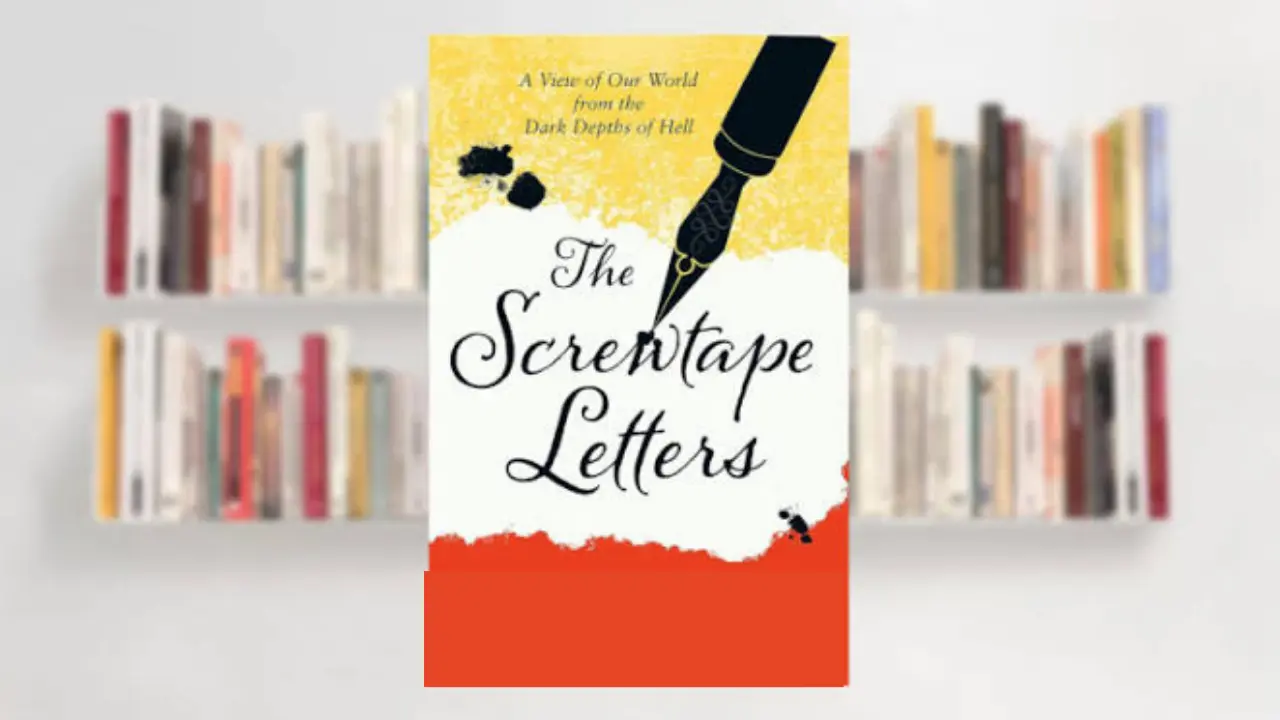
The Screwtape Letters Summary Plot, Themes, And Meaning
The Screwtape Letters is a satirical Christian work by C. S. Lewis, told through 31 fictional letters from Screwtape, a high-ranking demon, to his inexperienced nephew Wormwood. This screwtape letters summary follows their effort to lead an unnamed English man—known only as “the Patient”—away from God through distraction, pride, fear, and small daily compromises rather than obvious evil.
The book’s unusual method is its central feature: moral values are reversed. God is called “the Enemy,” while hell’s goal is to gain the Patient’s soul. By showing temptation from a demon’s viewpoint, Lewis asks readers to notice how ordinary habits and attitudes can shape a person’s character.
The Screwtape Letters summary in brief
Screwtape advises Wormwood not to push the Patient toward dramatic wrongdoing if subtler methods will work. He recommends keeping the man absorbed in shallow arguments, fashionable opinions, irritations, anxieties, and self-centered feelings. Wormwood’s task becomes harder after the Patient converts to Christianity and begins taking his faith seriously.
Throughout the letters, Screwtape explains how demons can exploit the Patient’s relationships, church attendance, wartime fears, changing moods, and sexual desires. Yet the Patient repeatedly receives help through prayer, humility, friendship, ordinary duties, and a growing ability to love without making himself the center of every situation.
Near the end, the Patient dies suddenly during an air raid in wartime London. Because he dies faithful to God, he is beyond the demons’ reach. Screwtape responds with furious contempt toward Wormwood, who has failed his assignment and is implied to face punishment from the very powers he serves.
How the story is structured
The book is not a conventional novel with scenes and dialogue. It consists entirely of Screwtape’s letters to Wormwood. Readers never see Wormwood’s replies, hear directly from the Patient, or receive a detailed description of the Patient’s life. Instead, they must infer events from Screwtape’s complaints and instructions.
This limited viewpoint creates both humor and tension. Screwtape is intelligent and observant, but he is also morally distorted. He cannot understand self-giving love as a good in itself, and he assumes every relationship is ultimately a struggle for control. His advice can therefore reveal truth to the reader while remaining false or corrupt within the story.
The Patient’s spiritual journey
At the beginning, the Patient is spiritually vulnerable. Screwtape tells Wormwood to prevent serious reflection by keeping him focused on immediate sensations, routine worries, and empty verbal disputes. The demon wants him to treat abstract arguments as more “real” than the concrete duties and people in front of him.
The Patient’s conversion changes the conflict. Screwtape does not assume that churchgoing will automatically make him mature; instead, he urges Wormwood to use religious life against him. The Patient might become irritated by fellow church members, judge them by superficial habits, or become proud of his own beliefs. Lewis’s point is that even good institutions and sincere beliefs can be turned into occasions for vanity or resentment.
The Patient also experiences emotional ups and downs. Screwtape calls these recurring changes “troughs.” During low periods, religious feeling may fade and life may seem dull. For Screwtape, this is a chance to encourage discouragement or laziness. In the book’s moral framework, however, remaining faithful during an unexciting or difficult period can strengthen character more deeply than acting only when one feels inspired.
What Screwtape teaches Wormwood about temptation
Screwtape’s strategy relies on gradual moral decline. He is less interested in spectacular sins than in choices that slowly make the Patient less honest, less attentive, less grateful, and less loving. The letters present temptation as a process of misdirection: a person is led away from what matters by becoming preoccupied with what does not.
Distraction and “the ordinary”
One recurring idea is that spiritual failure often begins with distraction. Screwtape wants the Patient to live in a vague state of mental busyness, where he reacts to whatever is nearest rather than examining his beliefs and actions. Lewis does not portray everyday life itself as bad. The danger is using routine, entertainment, news, or practical concerns to avoid honest thought and responsible action.
Pride disguised as humility or independence
Pride is one of the book’s main concerns. Screwtape wants the Patient to feel superior, whether because he is educated, politically aware, spiritual, fashionable, or even “humble.” A person can be proud of having the right opinions, of appearing modest, or of being different from others.
Lewis treats humility not as pretending to have no abilities, but as freedom from obsessive self-comparison. In the letters, the most dangerous pride is often quiet and socially acceptable: the habit of measuring one’s value by being above, ahead of, or more enlightened than someone else.
Relationships, irritation, and uncharitable assumptions
Screwtape repeatedly advises Wormwood to exploit small tensions between the Patient and his mother. Everyday annoyances—a tone of voice, a repeated habit, a careless remark—can become fuel for anger when a person assumes the worst about someone close to them.
The demons encourage people to demand sympathy for their own moods while showing little patience with the moods of others. This part of the book gives the story much of its practical force. Lewis suggests that love is tested not only by major sacrifices but also by how people interpret and respond to ordinary frustrations.
Fear and the misuse of the future
Written during the Second World War, the letters address fear, death, and uncertainty. Screwtape sees suffering and danger as opportunities, but he does not have complete control over their effect. A crisis can produce panic and bitterness, yet it can also make a person more aware of mortality, duty, courage, and dependence on God.
The demons prefer that the Patient live mentally in an imagined future—one filled with possible disasters or hoped-for comforts—rather than acting faithfully in the present. The book does not deny the reality of danger. It warns against allowing anticipated events to dominate the mind before they happen.
Sex, appetite, and excess
The letters discuss sexual desire, but Screwtape’s broader concern is appetite without self-control. His aim is not simply to make the Patient enjoy bodily pleasures; it is to turn desire into selfishness, fantasy, dissatisfaction, or entitlement.
Lewis also makes a surprising point about excess in apparently small things. A person may be governed by demanding preferences, complaining habits, or an insistence on being catered to. In this view, selfishness can hide behind a claim that one merely has “standards” or deserves a little comfort.
Alphabet Bubble Letters Easy Steps, Styles & Tips for Beginners
Major themes in The Screwtape Letters
- Small choices shape character: The book emphasizes habits, intentions, and repeated responses more than single dramatic acts.
- Good things can be misused: Religion, friendship, patriotism, pleasure, and even humility can become distorted by pride or self-interest.
- Love differs from possession: Screwtape understands relationships as ownership and control, while the Christian vision in the book treats love as willing another person’s good.
- Feelings are not the whole of faith: Emotional highs may pass. Lewis presents perseverance in dry or difficult periods as meaningful.
- Time can be a spiritual distraction: Regret about the past and anxiety about the future can prevent responsible attention to the present.
Why the reversed perspective matters
The book’s satire works because Screwtape describes harmful conduct as success. When he praises resentment, self-importance, or spiritual laziness, readers are meant to recognize the damage those attitudes cause. The reversal also prevents the work from becoming a simple list of moral instructions. Readers must interpret the demon’s advice and make the moral inversion for themselves.
Screwtape is not presented as a reliable guide to Christian doctrine. He is a fictional tempter whose language reveals his own limits. He cannot grasp grace, joy, or humility except as threats to his system. This is why the letters can be funny while also being serious: the speaker’s cynicism exposes a narrow, manipulative view of human life.
Cute Bubble Letters Easy Step-by-Step Guide for Beginners
What happens at the end?
The climax comes when the Patient dies during an air raid. His death is not treated as the demons’ triumph. Instead, he awakens into God’s presence, and the spiritual confusion that the demons had tried to maintain is over. Wormwood loses the Patient completely.
Screwtape’s final letter is full of rage because Wormwood has failed to secure the soul assigned to him. The ending gives the book its clearest statement of hope: despite temptation, fear, and moral failure, a human life is not defined by the demons’ plans. The Patient’s final destination reverses everything Screwtape had been working toward.
Is Screwtape Proposes a Toast part of the book?
Screwtape Proposes a Toast is a later Lewis piece written in Screwtape’s voice. It is often printed with editions of The Screwtape Letters, but it is separate from the original sequence of 31 letters. Its focus is broader social criticism, especially on distorted ideas of equality and education, rather than the Patient’s story.
For a plot summary of the original work, it is best to treat the toast as an additional companion piece rather than part of the main narrative.
Frequently asked questions
Is The Screwtape Letters a novel?
It is usually described as a satirical Christian work or epistolary fiction. It has a narrative arc, but it is presented as letters rather than as a standard novel with chapters of action and dialogue.
Who are Screwtape and Wormwood?
Screwtape is an experienced demon and Wormwood is his nephew and trainee. Screwtape writes to Wormwood with instructions for tempting the unnamed Patient.
Who is “the Enemy” in the letters?
“The Enemy” is Screwtape’s hostile name for God. Because the story is narrated from a demonic perspective, its moral language is intentionally inverted.
Does the Patient remain a Christian?
Yes. Though he faces temptation and moments of weakness, the ending shows that he dies faithful to God and escapes the demons’ control.
What is the main message of the book?
There is no single lesson, but a central idea is that people are often drawn away from love and moral clarity by small, repeated acts of selfishness, distraction, pride, and resentment. The book also stresses the value of humility, attention, perseverance, and grace.
Conclusion
This screwtape letters summary shows why Lewis’s short book has lasting impact: it turns the inner life into a sharp, often comic moral drama. Through Screwtape’s failed attempt to ruin the Patient, the letters portray temptation as subtle and habitual—but also portray faithfulness, ordinary love, and humble persistence as stronger than the forces trying to corrupt them.